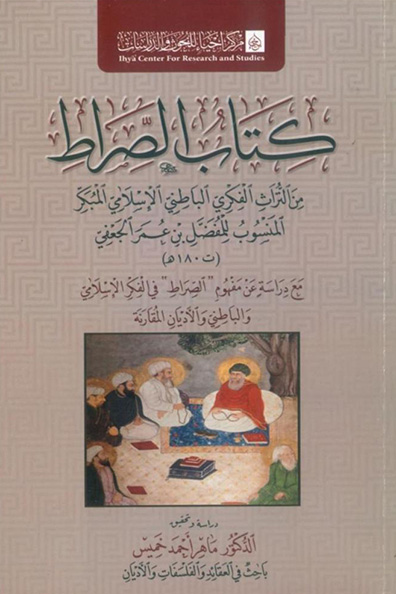
Book page
Kitab al-Sirat
From Early Islamic Esoteric Intellectual Heritage Attributed to al-Mufaddal ibn Umar al-Ju'fi (d. 180 AH), with a Study of the Concept of al-Sirat in Islamic Thought, Esoteric Traditions, and Comparative Religion
An Arabic scholarly work presenting a study and edited text of Kitab al-Sirat, attributed to al-Mufaddal ibn Umar al-Ju'fi, alongside an inquiry into the concept of al-Sirat in Islamic, esoteric, and comparative religious thought. A valuable title for readers interested in early Islamic intellectual heritage and symbolic-theological interpretations.
About this book
Kitab al-Sirat, attributed to the early figure Al-Mufaddal ibn Umar al-Ju'fi (d. 180 AH), stands as a foundational text in early Islamic esoteric and Gnostic literature. In this critical edition, Dr. Maher Ahmed Khamis presents a meticulously edited version of the manuscript alongside a comprehensive academic study.
The research explores the multifaceted concept of Al-Sirat (The Path). It contrasts the orthodox Quranic understanding of the Straight Path with esoteric, allegorical interpretations that view it as a spiritual ascent or cosmic transmigration. Furthermore, Dr. Khamis connects these themes to comparative religious traditions—such as Zoroastrianism, Hermeticism, and early Gnosticism—offering an indispensable resource for understanding the evolution of secret doctrines and religious syncretism.
The research explores the multifaceted concept of Al-Sirat (The Path). It contrasts the orthodox Quranic understanding of the Straight Path with esoteric, allegorical interpretations that view it as a spiritual ascent or cosmic transmigration. Furthermore, Dr. Khamis connects these themes to comparative religious traditions—such as Zoroastrianism, Hermeticism, and early Gnosticism—offering an indispensable resource for understanding the evolution of secret doctrines and religious syncretism.
Why read it?
Read this book for its focused engagement with a major religious and symbolic concept: al-Sirat. Rather than treating the term only as a familiar doctrinal expression, the work invites a more analytical reading across Islamic thought, esoteric interpretation, and comparative religion. Its combination of study and textual editing makes it especially useful for readers who want both source material and interpretive context.
Who is it for?
This title is best suited to researchers, graduate students, and advanced readers in Islamic studies, intellectual history, esoteric thought, textual editing, and comparative religion. It will also appeal to readers interested in how central religious concepts move between doctrine, symbol, interpretation, and heritage literature.
Book details
Language
ar
ISBN-13
9789779610696
Page count
248
Age rating
Adults