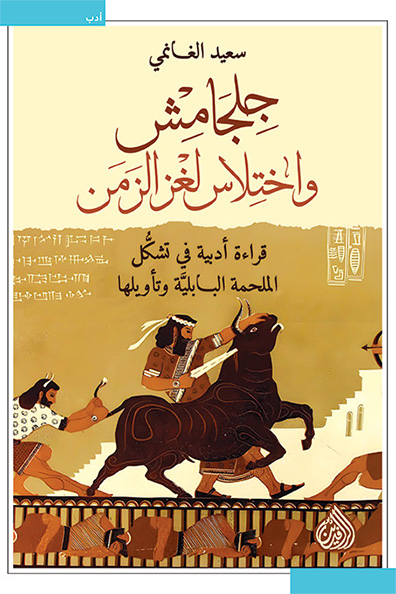
Book page
Gilgamesh and the Appropriation of the Riddle of Time
.
A deep critical and hermeneutic reading of humanity's first epic, revealing how ancient Mesopotamians used storytelling to tame the weight of death and steal the secret of time.
About this book
In this extraordinary work, critic and researcher Said Al-Ghanimi dives deep into the Epic of Gilgamesh, offering a contemporary critical vision using modern analytical methodologies. Al-Ghanimi does not view the epic as a mere literary piece or a collection of heroic tales; instead, he traces the complex historical path through which the Babylonians merged scattered Sumerian oral stories into a single, unified narrative with one central hero, giving birth to the "Epic" as a genre. The book analyzes the narrative, symbolic structures, and social-oral functions of the ancient text, demonstrating how this timeless masterpiece expressed primal human anxiety regarding mortality, death, and immortality, and how storytelling became the ultimate human tool to steal the mystery of time and bestow eternity upon mortal existence.
Why read it?
To travel back to the cradle of human literature, understand how the first epic in history was structured, and discover through modern critical lenses that the battle against mortality through the written word is humanity's oldest and most noble struggle.
Who is it for?
For lovers of ancient Mesopotamian civilizations and mythologies, researchers and critics interested in narrative structures and modern anthropological methods, and anyone seeking a philosophical reading of Gilgamesh's quest.
Book details
Language
ar
ISBN-13
9789922721507
ISBN-10
9922721503
Page count
332
Age rating
General