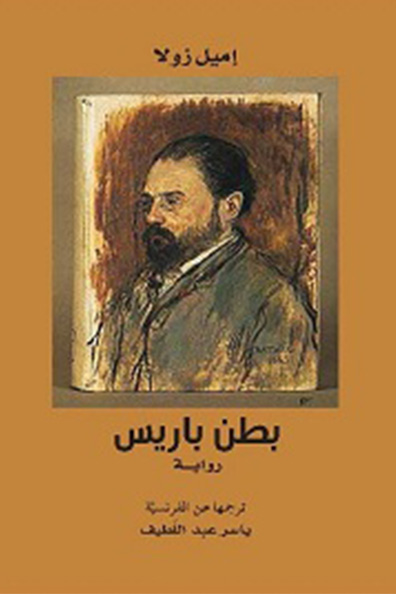
Book page
The Belly of Paris
Translation: Yasser Abdel-Latif
A breathtaking sensory masterpiece set within the mammoth central food markets of 19th-century Paris (Les Halles). Through the gripping story of an escaped political prisoner who finds himself an outcast in a society consumed by complacency, Zola weaves an unforgettable allegorical battle between the idealistic "Lean" and the gluttonous "Fat."
About this book
Welcome to The Belly of Paris, Émile Zola’s extraordinary, sensory-rich portrait of Les Halles, the massive central food market of 19th-century Paris. Amidst mountainous displays of fresh meats, oceans of glistening fish, and overflowing stalls of cheeses—celebrated in literary history as the famous "Cheese Symphony"—Zola sets a profound social drama that is as appetizing as it is terrifying.
The narrative follows Florent, an innocent political prisoner who escapes execution in French Guiana and returns to a transformed Paris. Disguised and destitute, he is taken in by his brother and sister-in-law, prosperous charcutiers (pork butchers) in the heart of the market. Florent quickly realizes that he is an anomaly in this world of abundance. Zola masterfully categorizes the society into two symbolic camps: the complacent "Fat" who embrace consumerism and state compliance for comfort, and the idealistic "Lean" who hunger for justice and liberty. As Florent gets drawn into a futile revolutionary plot, the market becomes a breathing, visceral character—a monstrous stomach that chews up and spits out political ideals to preserve its own satiety. Rendered into Arabic with poetic precision by Yasser Abdel-Latif, this classic becomes a brilliant cinematic experience exploring the eternal conflict between human conscience and physical indulgence.
The narrative follows Florent, an innocent political prisoner who escapes execution in French Guiana and returns to a transformed Paris. Disguised and destitute, he is taken in by his brother and sister-in-law, prosperous charcutiers (pork butchers) in the heart of the market. Florent quickly realizes that he is an anomaly in this world of abundance. Zola masterfully categorizes the society into two symbolic camps: the complacent "Fat" who embrace consumerism and state compliance for comfort, and the idealistic "Lean" who hunger for justice and liberty. As Florent gets drawn into a futile revolutionary plot, the market becomes a breathing, visceral character—a monstrous stomach that chews up and spits out political ideals to preserve its own satiety. Rendered into Arabic with poetic precision by Yasser Abdel-Latif, this classic becomes a brilliant cinematic experience exploring the eternal conflict between human conscience and physical indulgence.
Why read it?
Because it is a supreme example of literary Naturalism that treats prose like an Impressionist canvas. Readers will be captivated by its rich imagery and suspenseful plot, while discovering a timeless sociological critique of how material comfort can blind a society to moral rot and systemic injustice.
Who is it for?
For enthusiasts of classic French literature, fans of descriptive realism and naturalism, and anyone captivated by socio-political allegories that explore the tension between political revolution and middle-class complacency.
Book details
Language
ar
ISBN-13
9789948371823
Page count
396
Age rating
Adults