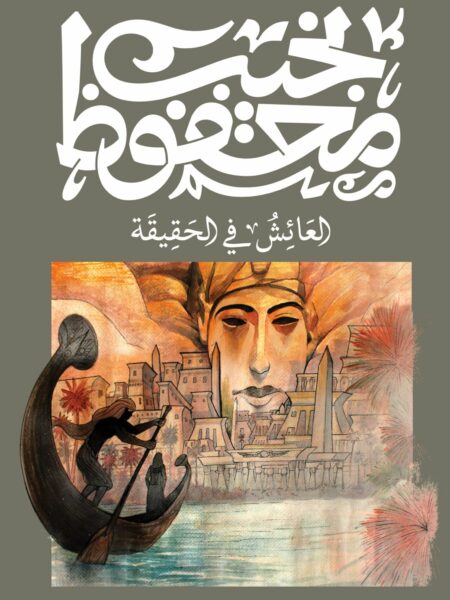
Book page
Akhenaten, Dweller in Truth
Akhenaten: Dweller in Truth is a historical and philosophical novel by Naguib Mahfouz, inspired by the life of the ancient Egyptian pharaoh Akhenaten, one of the most controversial figures in Egyptian history. The novel follows a young man who seeks to uncover the truth about Akhenaten years after his death by interviewing people who knew him or lived during his reign. Through a series of contrasting testimonies and perspectives, Mahfouz explores profound questions about truth, power, religion, and intellectual reform, creating a compelling narrative that blends historical fiction with philosophical inquiry.
About this book
Akhenaten: Dweller in Truth is one of the most significant historical and philosophical novels by Egyptian Nobel Prize-winning author Naguib Mahfouz. In this work, Mahfouz revisits ancient Egyptian history to re-examine the controversial figure of Pharaoh Akhenaten, one of the most debated rulers in the history of ancient Egypt.
Rather than presenting a straightforward biographical account, the novel adopts an investigative narrative structure. It follows a young man who, many years after Akhenaten’s death, embarks on a quest to uncover the truth about his life and reign. To do so, he collects testimonies from individuals who either knew Akhenaten personally or were indirectly connected to him. Through these varying accounts, the reader is presented with multiple, often conflicting perspectives on the same historical figure.
By employing this polyphonic narrative style, Mahfouz raises profound philosophical questions about the nature of truth itself. Is truth absolute and fixed, or is it shaped and fragmented by different human perspectives? The novel also explores the tension between political and religious authority, as well as Akhenaten’s radical attempt at religious reform when he introduced the worship of a single god, challenging the established beliefs of ancient Egyptian society.
Rich in philosophical depth, the novel seamlessly blends historical fiction with intellectual inquiry. It does not merely reconstruct past events but uses history as a framework to explore universal questions concerning truth, faith, power, freedom, and the limits of human understanding. At the same time, it reflects Mahfouz’s enduring interest in the complexities of human nature and the motives that drive individuals within shifting historical contexts.
Ultimately, Akhenaten: Dweller in Truth is not just a historical novel; it is a profound intellectual journey that invites readers to actively engage in the search for truth rather than passively receive it. This makes it one of the most thought-provoking and philosophically rich works in Naguib Mahfouz’s literary career.
Rather than presenting a straightforward biographical account, the novel adopts an investigative narrative structure. It follows a young man who, many years after Akhenaten’s death, embarks on a quest to uncover the truth about his life and reign. To do so, he collects testimonies from individuals who either knew Akhenaten personally or were indirectly connected to him. Through these varying accounts, the reader is presented with multiple, often conflicting perspectives on the same historical figure.
By employing this polyphonic narrative style, Mahfouz raises profound philosophical questions about the nature of truth itself. Is truth absolute and fixed, or is it shaped and fragmented by different human perspectives? The novel also explores the tension between political and religious authority, as well as Akhenaten’s radical attempt at religious reform when he introduced the worship of a single god, challenging the established beliefs of ancient Egyptian society.
Rich in philosophical depth, the novel seamlessly blends historical fiction with intellectual inquiry. It does not merely reconstruct past events but uses history as a framework to explore universal questions concerning truth, faith, power, freedom, and the limits of human understanding. At the same time, it reflects Mahfouz’s enduring interest in the complexities of human nature and the motives that drive individuals within shifting historical contexts.
Ultimately, Akhenaten: Dweller in Truth is not just a historical novel; it is a profound intellectual journey that invites readers to actively engage in the search for truth rather than passively receive it. This makes it one of the most thought-provoking and philosophically rich works in Naguib Mahfouz’s literary career.
Why read it?
We read Akhenaten: Dweller in Truth because it offers a profound intellectual and literary experience that challenges the very concept of truth through multiple perspectives. Rather than presenting history as a fixed narrative, the novel reveals it as a collection of conflicting testimonies, encouraging readers to question how truth is formed and understood.
The novel is also significant for its deep exploration of power, religion, reform, and human understanding, using the historical figure of Akhenaten as a lens through which broader philosophical questions are examined. By blending historical fiction with philosophical reflection, Naguib Mahfouz creates a work that is not only engaging as a story but also intellectually stimulating, inviting readers to reflect, question, and rethink their assumptions about history and reality.
The novel is also significant for its deep exploration of power, religion, reform, and human understanding, using the historical figure of Akhenaten as a lens through which broader philosophical questions are examined. By blending historical fiction with philosophical reflection, Naguib Mahfouz creates a work that is not only engaging as a story but also intellectually stimulating, inviting readers to reflect, question, and rethink their assumptions about history and reality.
Who is it for?
Akhenaten: Dweller in Truth is intended for readers who appreciate historical and philosophical fiction, as well as admirers of Naguib Mahfouz’s intellectually rich literary style. It is especially suited to those who enjoy novels that go beyond traditional storytelling to explore deep intellectual questions. The book appeals to readers interested in themes such as truth, power, religion, and the multiple interpretations of history.
It is also ideal for those who seek a reflective reading experience that encourages critical thinking, challenges assumptions, and invites readers to engage with history and reality from different and often conflicting perspectives.
It is also ideal for those who seek a reflective reading experience that encourages critical thinking, challenges assumptions, and invites readers to engage with history and reality from different and often conflicting perspectives.
Book details
Language
ar
ISBN-13
9789778669176
Page count
160
Age rating
General